
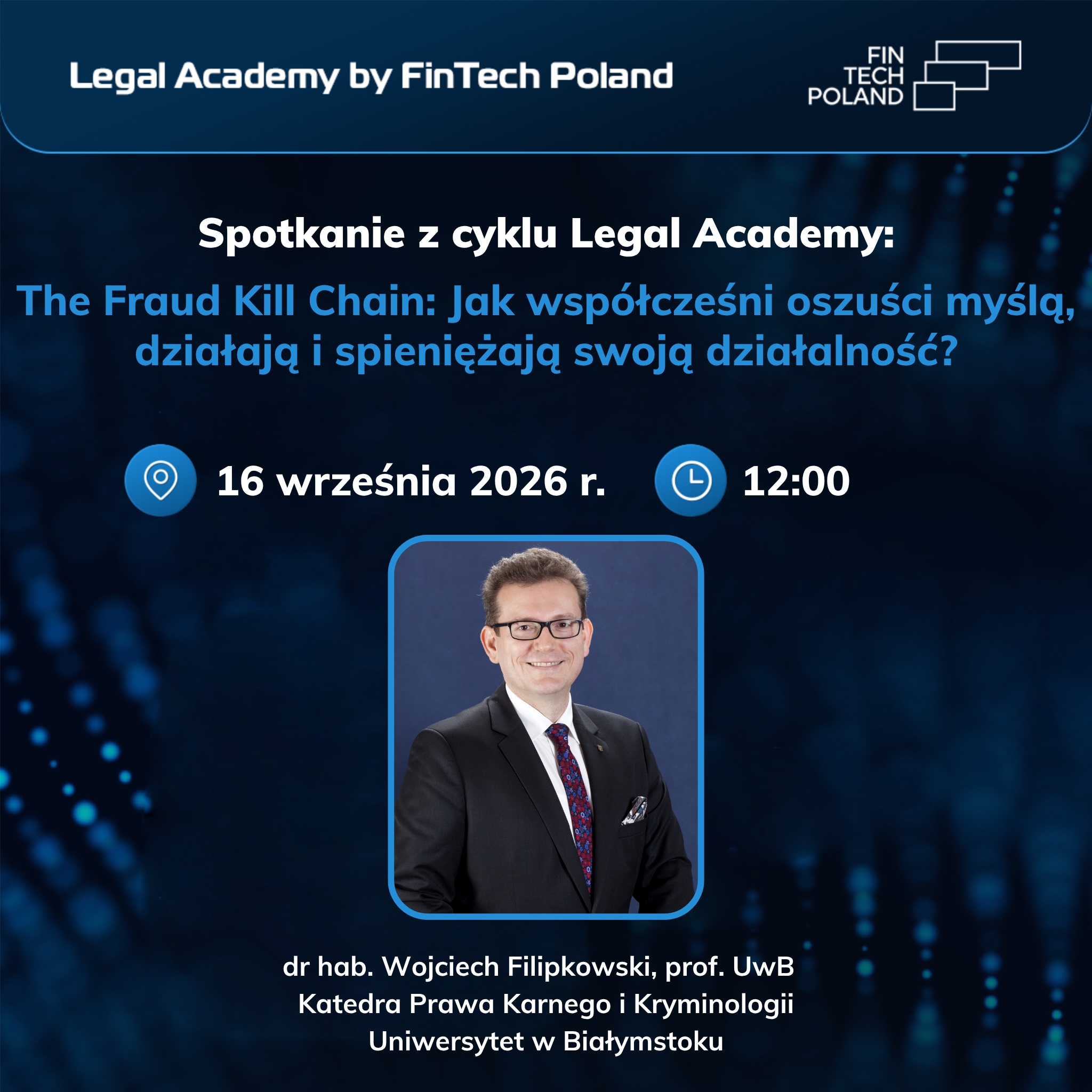
[Legal Academy] The Fraud Kill Chain: How Modern Fraudsters Think, Operate and Cash Out
Instant payments, open banking, crypto and AI have transformed finance — but they have also changed the techniques and tactics used by fraudsters.
Fraud is increasingly becoming a specialised ecosystem of services, ranging from access brokers and organised pig-butchering operations to teams capable of creating deepfake executives for fraudulent video calls.
During this Legal Academy session, we will look at the fraud kill chain through the lens of criminology and forensic science and explore the crime scripts behind three major threats facing the fintech sector:
- APP fraud and instant payment scams – how social engineering scenarios are designed to persuade victims to authorise transactions themselves;
- pig butchering – industrial-scale fraud operations, long-term manipulation of victims and fake investment platforms;
- synthetic trust attacks using deepfakes – the new generation of BEC and CEO fraud, in which AI can be used to impersonate trusted executives and influence financial decisions.
Rather than presenting another checklist of fraud-prevention measures, the session will map the attack process from reconnaissance and manipulation to cash-out, identifying concrete intervention points for banks, payment providers, RegTech and AML companies, IDtech, crypto businesses, lawyers and investors.
We will also discuss why, in the age of AI, effective fraud prevention increasingly requires us to look beyond transaction monitoring and focus on the human decision itself — whether made by a customer, employee or board member.
The session will be led by Wojciech Filipkowski, PhD, DSc, Professor at the University of Białystok, combining current academic research on economic crime with the realities of products, regulation and operational risk in the Polish and European fintech sector.
The key question will not simply be “How can we avoid being scammed?”, but rather:
How does the modern fraudster think — and how can we make attacking our ecosystem no longer worth the effort?
Language of the meeting: 🇵🇱
